

Is Your U.S. Tap Water Safe? What You Should Know About PFAS and Certified Water Purifiers
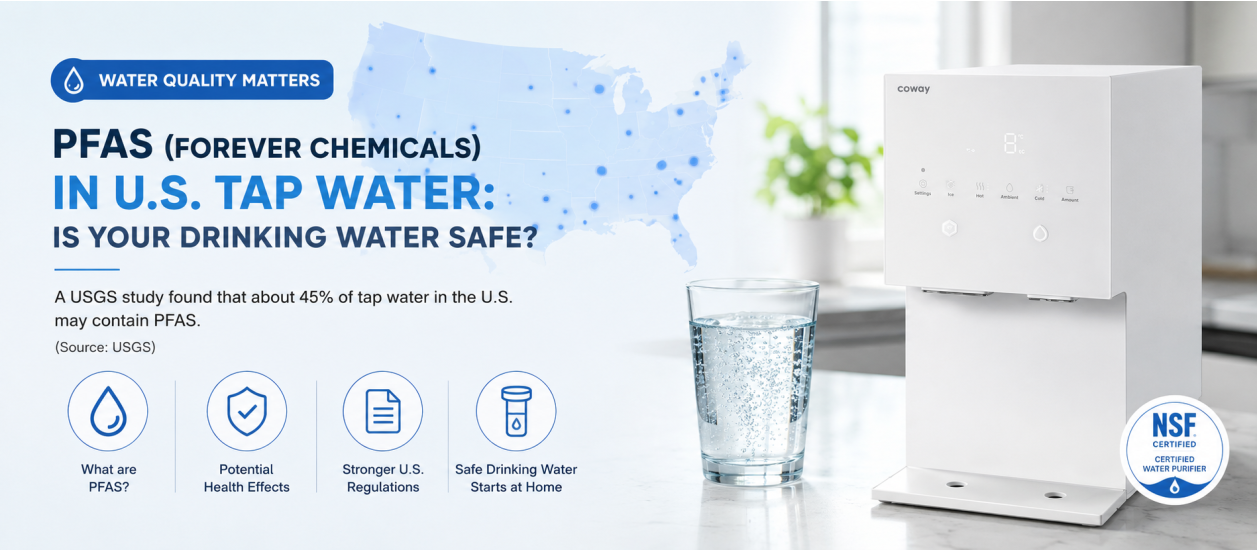
Why Are People Talking About PFAS?
PFAS (Per- and Polyfluoroalkyl Substances), often called Forever Chemicals, have become one of the most discussed topics in drinking water safety across the United States.
According to a nationwide study conducted by the U.S. Geological Survey (USGS), approximately 45% of U.S. tap water samples may contain one or more PFAS compounds. The results vary depending on the water source and location, but the study has encouraged many families to pay closer attention to their drinking water.
As a result, searches for terms like PFAS water filter, tap water safety, and water purifier have increased significantly.
What Are PFAS?
PFAS are a group of synthetic chemicals used in many everyday products, including:
- Non-stick cookware
- Water-resistant clothing
- Food packaging
- Firefighting foam
- Industrial manufacturing
These chemicals are extremely durable and break down very slowly in the environment, which is why they are commonly known as Forever Chemicals.
Researchers continue to study their long-term environmental and health impacts.
Does This Mean U.S. Tap Water Is Unsafe?
Not necessarily.
Public drinking water in the United States is continuously monitored and regulated under federal and state guidelines.
However, because PFAS have received increased scientific attention, the U.S. Environmental Protection Agency (EPA) has strengthened drinking water standards and continues to update regulations to reduce long-term exposure.
For many households, the goal is not to avoid tap water completely but to improve water quality with an appropriate home filtration system.
Why Water Purifier Certifications Matter
When shopping for a water purifier, appearance and price are important—but certifications are equally essential.
Independent certifications verify that a product has been tested against recognized performance standards.
Two of the most respected organizations are:
NSF International
NSF develops and verifies standards for drinking water products, helping consumers identify certified filtration performance.
Water Quality Association (WQA)
The WQA Gold Seal Certification recognizes products that meet strict industry requirements for safety, material quality, and contaminant reduction.
Choosing certified products provides greater confidence that performance claims have been independently evaluated.
Important NSF Standards to Know
Many certified water purifiers are tested under recognized NSF/ANSI standards, including:
NSF/ANSI 42
- Reduces chlorine taste and odor
- Improves aesthetic water quality
NSF/ANSI 53
- Reduces many harmful contaminants, including lead
NSF/ANSI 372
- Verifies lead-free materials used in drinking water system components
NSF/ANSI 401
- Addresses emerging contaminants, including certain pharmaceuticals and chemicals
Not every water purifier is certified for the same standards, so reviewing each model's certification is recommended before purchasing.
Choosing a Water Purifier for Your Home
Water quality can vary from one city to another.
Depending on where you live, factors such as water hardness, aging infrastructure, or emerging contaminants like PFAS may influence your filtration needs.
When comparing water purifiers, consider:
- NSF Certified performance
- WQA Gold Seal certification
- Certified contaminant reduction claims
- Regular filter replacement
- Water quality reports for your local area
These factors can help you choose a filtration system that best fits your household.
📞 Direct Support Line: 934-216-5989
💬 KakaoTalk 1:1 Live Chat: https://open.kakao.com/o/sPRiCt4h
🌐 24/7 Official Online Store: www.cowayusaonline.com
Frequently Asked Question
Does the USGS study mean I should stop drinking tap water?
No. The study highlights that PFAS may be detected in some water supplies, but it does not suggest that all U.S. tap water is unsafe. Water quality varies by location, and many homeowners choose certified water purification systems as an additional step to improve drinking water quality.
References
- U.S. Geological Survey (USGS) – Tap Water Study Detects PFAS ("Forever Chemicals") Across the U.S.
- U.S. Environmental Protection Agency (EPA) – PFAS Drinking Water Information
- Korea Daily USA – PFAS News Coverage
- Coway USA – NSF & WQA Certified Water Purification Information